Let’s Go Bojo!
Ok, my last post was a New Year’s Prescription back in January. I told you then I would try to find some balance and post more often. Can’t say I’m balanced yet (no snide remarks please), but at least I beat the turn of the 2026 calendar!
Six years ago, I started these posts with some Thanksgiving Wine recommendations. With holiday feasts fast approaching, I thought it would be a good time to re-visit one of those classic, food-friendly wines – Beaujolais!
I know what you’re thinking. Don’t even go there. This is NOT the fruity little number that is grown, harvested, fermented and released all in the same year: Beaujolais Nouveau. You know, the one that has its 15 minutes of fame every November?
No, this is a serious red wine that also comes from the Beaujolais region in France. Cue the Wine Folly map…
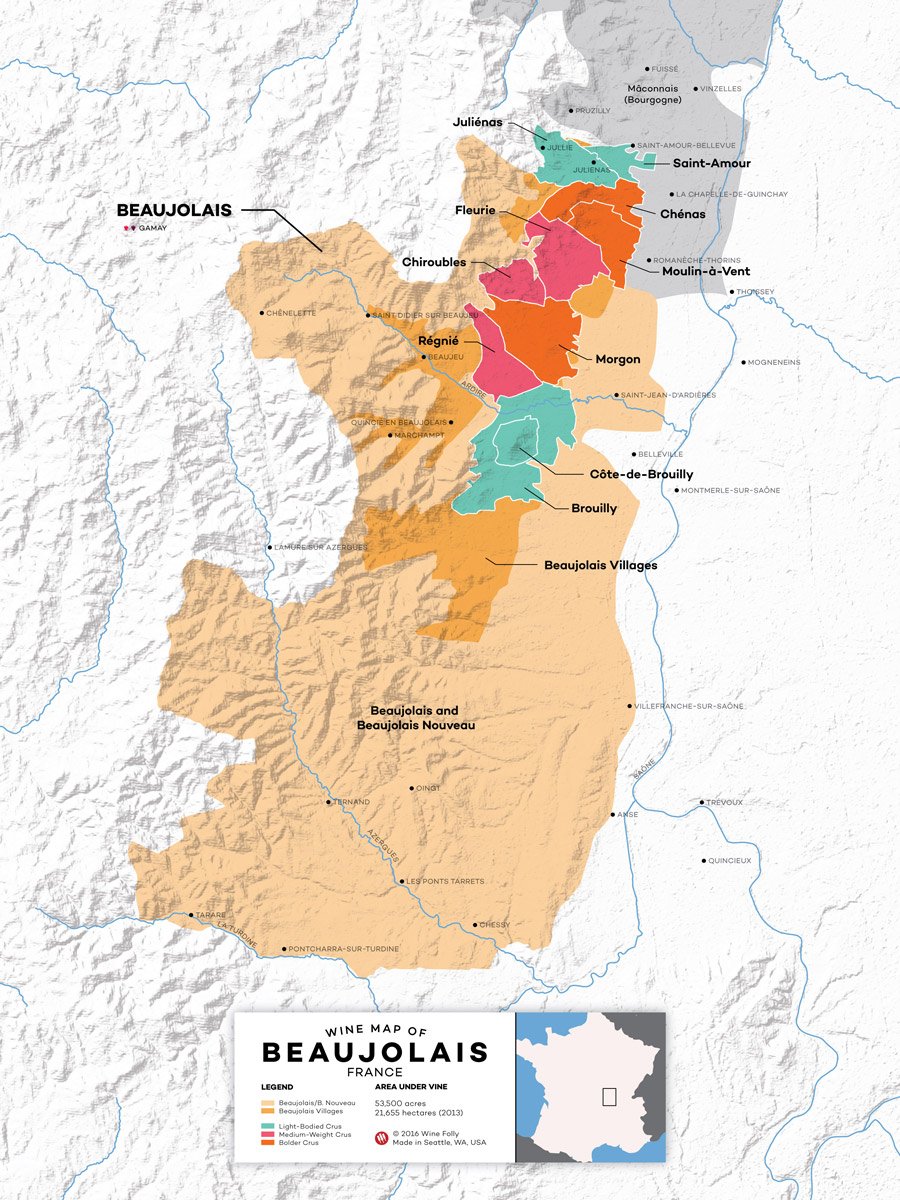
As always, a little explaining is in order…but that’s why you’re here, right?
We are in the Old World, and if you have read my book, Wine Made Easy: Wine 101 for Everyone , you know that names like Beaujolais refer to regions, not grape varietals. To put a finer point on the geography, Beaujolais is just north of Lyon, France, and just south of its more famous wine region neighbor Burgundy.
Before I introduce our wine, there is one important thing you need to know: Not all Bojo is created equal. There are three tiers or classifications of Beaujolais, in increasing order of complexity: Beaujolais AOP; Beaujolais Villages; Cru Beaujolais.
Our wine is a Cru. There are 10 Crus, all up in the north. They each have a distinct personality driven by different soils and micro-climates. Our wine comes from Fleurie (one of the pink shaded areas on the map above). The vines grow in ancient, eroded pink granite soils.
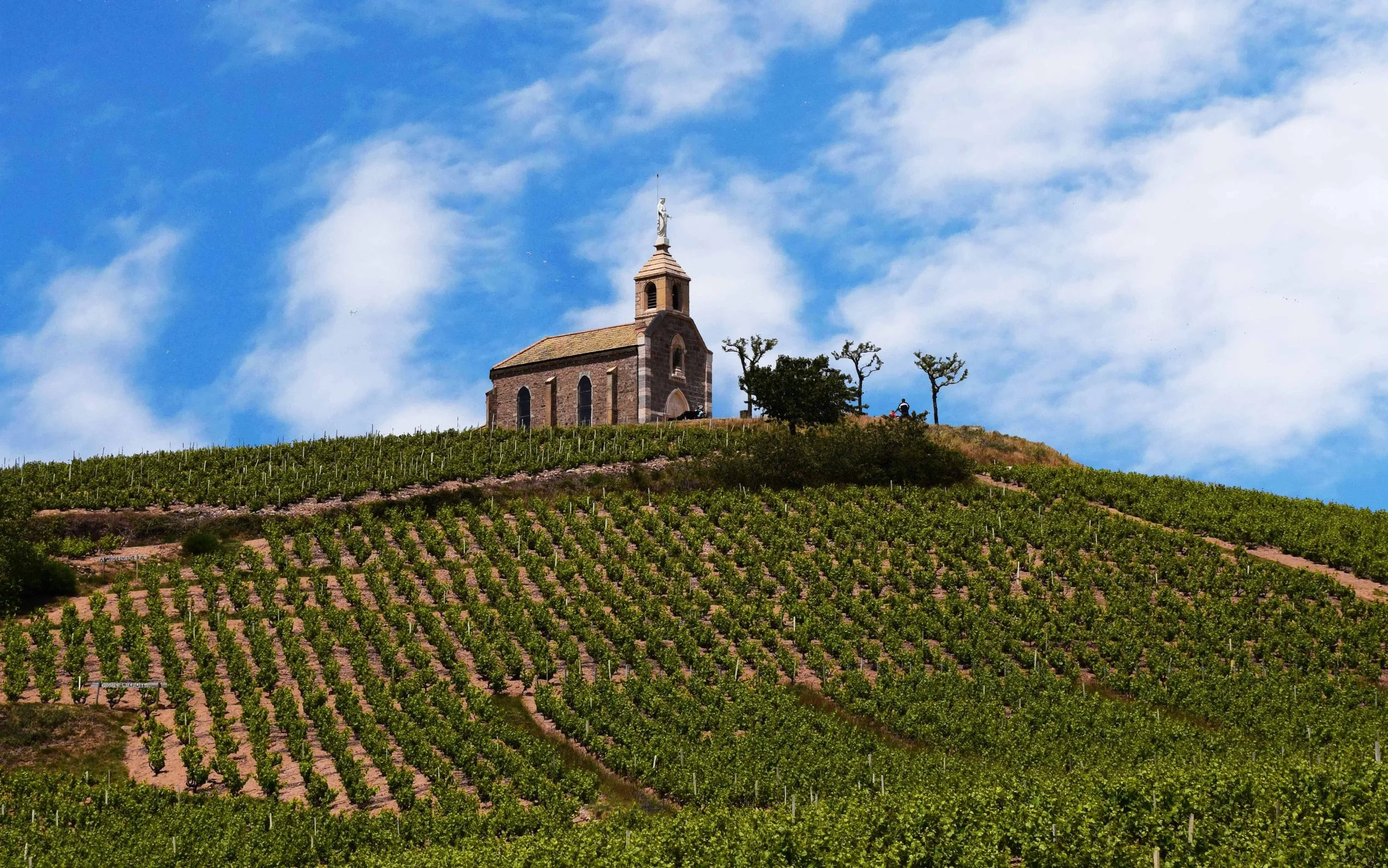
The Chapelle de la Madone, built in 1866, sits at the highest point in Fleurie.
So now we know where we are, but what are we drinking? Almost 100% of Cru Beaujolais is red, and it comes from a grape called Gamay. Think of Gamay as a Pinot Noir cousin. You know I’ve gone on about Pinot Noir being so versatile. Well, Gamay is a member of that club too. More on that in a moment…
Our Wine: Mommessin Fleurie “Grandes Mises” 2022. Low $30s retail.
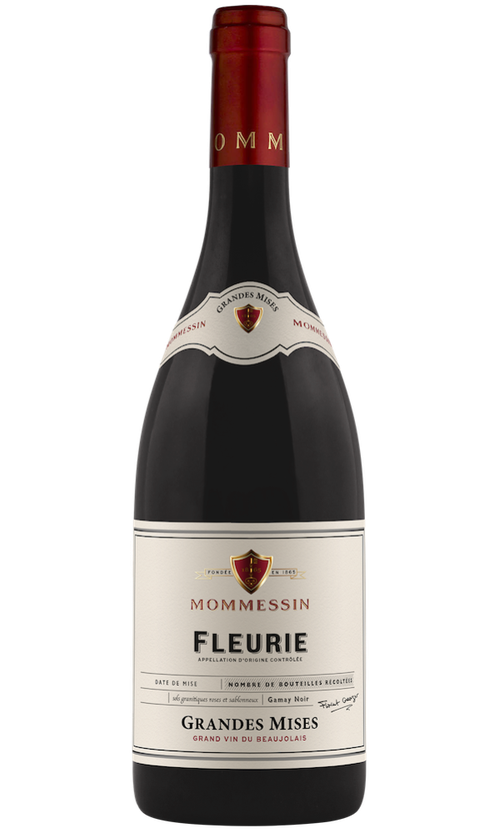
A little atypical for an Old World wine in that they give you the varietal on the front label (small print above the word “Mises”).
Mommessin has been around since 1865. They produce a wide range of Beaujolais, including bottlings from 6 of the 10 Crus. Mommessin likes to say they are the alliance of Beaujolais soul and Burgundy tradition.
Tasting:
This Beaujolais has a pale ruby color. On the nose, you get distinct red fruits: raspberry and maybe a little red currant or pomegranate. There is also a signature flower note. Gamay is often characterized by the scent of violets, but I got more of a rose note.
On the palate, those bright red fruits follow through. There is enough acidity to help make this a fresh, very versatile food wine. Tannins are low-to-moderate. You know they are there, helping to provide structure, but they don’t get in the way. The finish was surprisingly long. This is an elegant wine.
Serve this just a little cooler than you would a Merlot or Cabernet Sauvignon.
Food: What doesn’t Gamay go with? It is a natural with poultry (Thanksgiving anyone?), as well as various pork dishes. It handles spice just fine (Tikka Masala, lamb curry), and partners with all sorts of vegetable-focused dishes. Charcuterie boards? Check!
The Bottom Line:
Cru Beaujolais deserves a seat at your table. And not just for Thanksgiving, where it will shine. If you are “new to Cru”, Fleurie may be a good place to start, as it tends to produce a lighter style wine than Morgon or Moulin-a-Vent, which are two other Crus you are likely to find on the store shelves.
As we head into the end of year holidays, I hope you get some good down time with family and friends. Hopefully enjoying some good wine!
Until my next visit, as always, Cheers!